
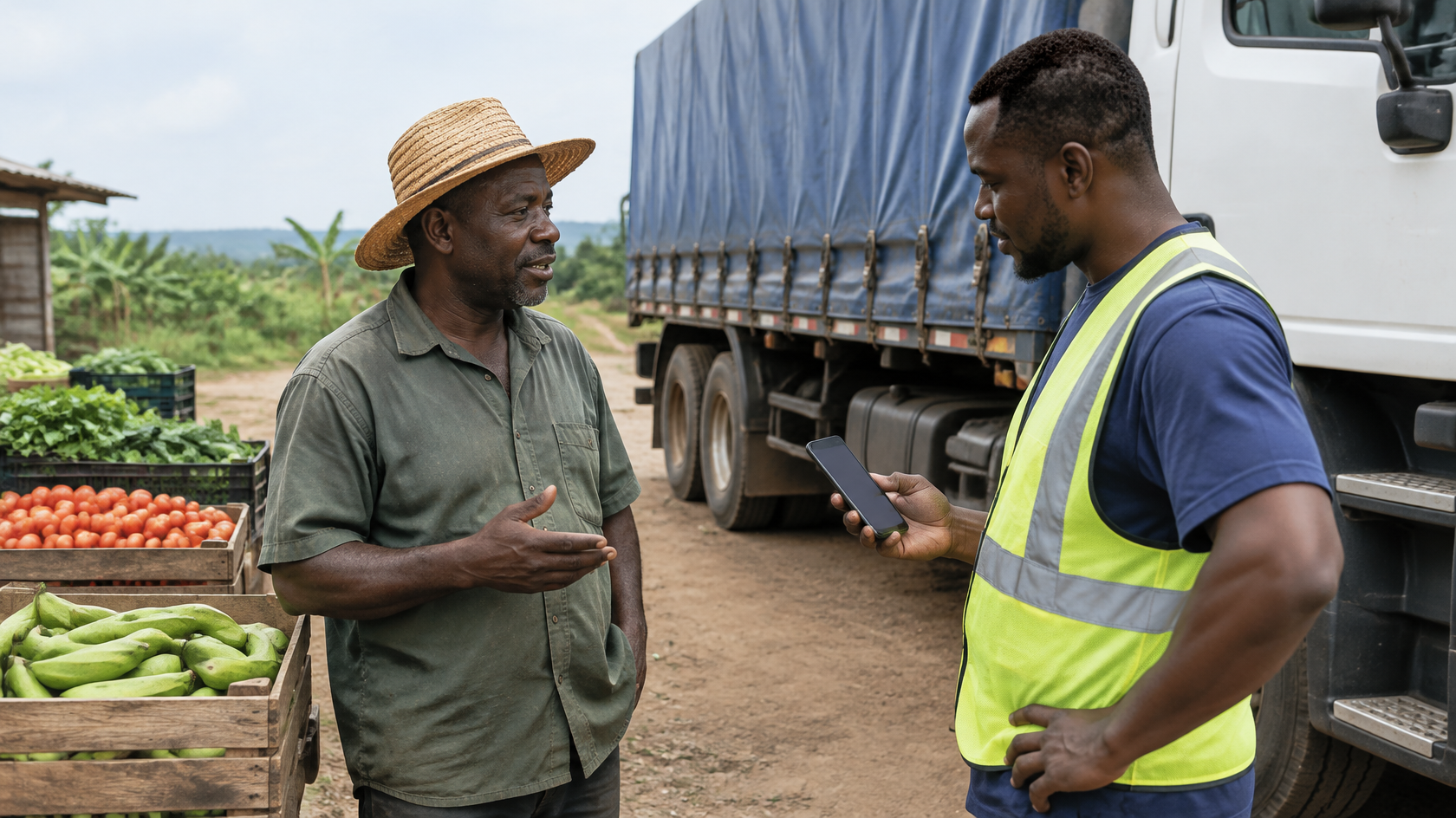
Separate and support produce so the load stays stable in transit.
Simple load-preparation steps to reduce crushing, contamination and confusion when moving common Ghanaian root crops and plantains.
Yam, cassava and plantain have different shapes and handling needs. Treating them as a generic bulk load can lead to crushing, unstable stacks or avoidable counting disputes. Plan packaging and load order around the crop and its condition.
Key takeaways
- Sort damaged produce before it is loaded.
- Use packaging and stacking methods appropriate to each crop.
- Make the package count and receiver expectations clear before dispatch.
Prepare the produce and packaging
Inspect the crop before loading and separate visibly damaged items where the buyer's process requires it. Keep produce off dirty or wet ground and use clean packaging that supports the load without trapping moisture or placing excessive pressure on the bottom layer.
Yams, cassava and plantains vary in size and condition. Avoid forcing mixed shapes into unstable stacks. Ask the buyer or an agricultural handling specialist about crop-specific packaging, ventilation and moisture requirements, especially for a longer journey.
Stack for stability, not maximum height
Use a level base and distribute weight across the floor. Put heavier, sturdier packages lower, keep fragile or easily bruised produce from bearing excess weight, and leave the load secure against movement. The driver should be able to see that the cargo is stable before departure.
Do not block doors, lights or access needed to secure the load. If a cover is required, choose one that protects the goods without creating unsafe heat or moisture conditions. Any special temperature requirement must be confirmed separately with a suitable operator.
Agree a simple dispatch and receipt check
Write down the crop types and package counts separately. If the load has several buyers, mark packages in a way both sender and recipient understand, without relying on memory or an unshared verbal arrangement.
At handover, count packages and note visible damage with the receiver. Confirm whether unloading labour is available and who signs or records acceptance. A clear record can help resolve later questions about missing or damaged goods.
Frequently asked questions
### Can yam, cassava and plantain be carried together?
They may be carried together if the packaging, hygiene, load security and handling requirements are compatible. Describe each crop and get the provider's confirmation.
### Should root crops be transported in open or closed packaging?
Use packaging appropriate to the crop and journey. Ask the buyer or a qualified produce-handling specialist about ventilation, moisture and protection needs.
### How can I reduce disputes about quantities?
Record package counts by crop at dispatch, identify the receiving contact and repeat the count during handover.
Topics covered
Ready to plan your delivery?
Post your cargo job, compare driver offers, and track delivery across Ghana.